Chapter two
Camilla, finding solace with clay and soil.
Words: Vitsœ
Photography: Kasia Bobula
Camilla’s life has not been easy of late, so it was with slight trepidation that we reached out to her to ask if she was willing to speak to us again about her life and Vitsœ. We wondered if sharing would be too sensitive for her.
The email which pinged back eased any anxiety, when she replied: “To reassure you, I don’t feel it is too sensitive at all. It was four years last Tuesday that John died and, although I miss him every day, there are constants in my life which remind me of the best of times with him, and our Vitsœ is among them.”
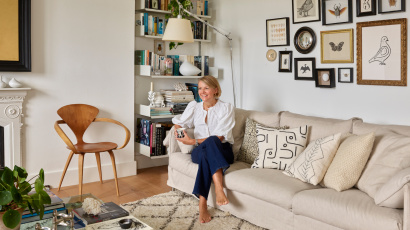
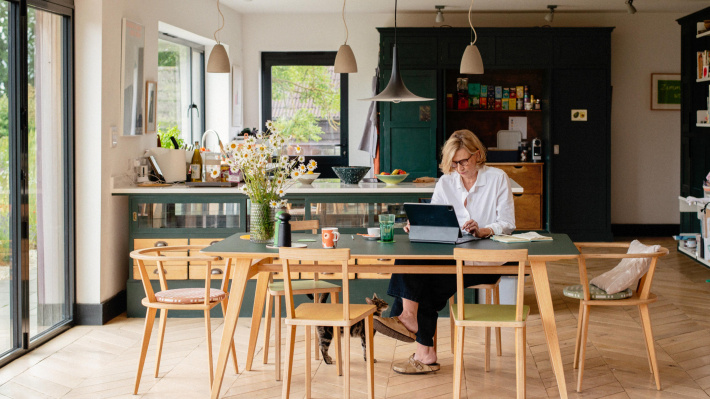
We sit in the open expanse of a contemporary house with a large, glazed wall overlooking Camilla’s Suffolk, England garden and the public parkland beyond. The house has warmth, despite being a large open space, partly achieved by the use of a reclaimed wooden floor.
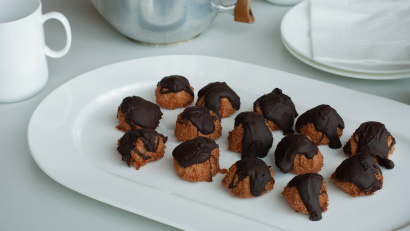
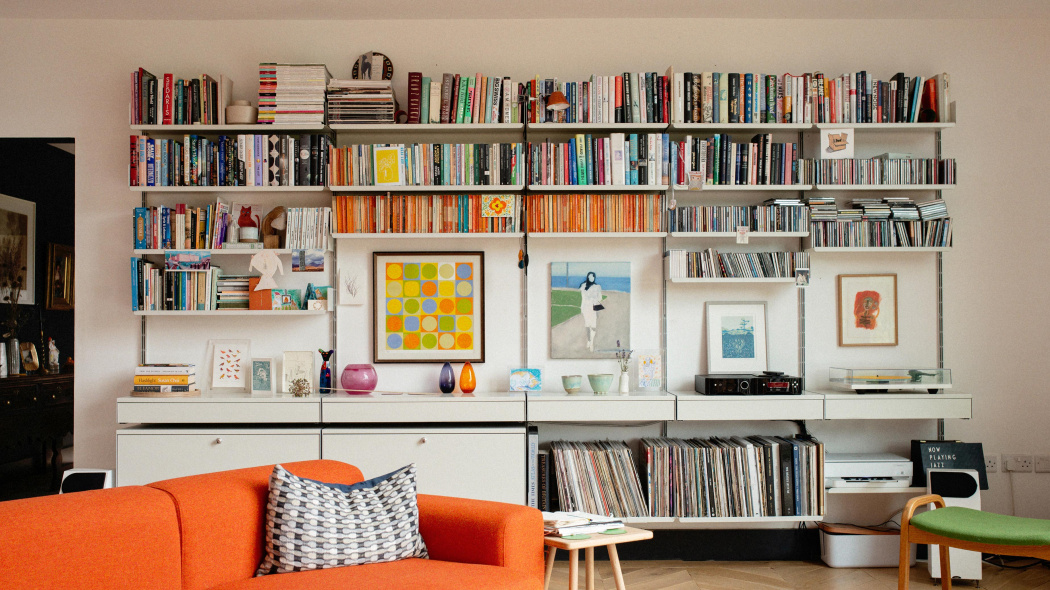
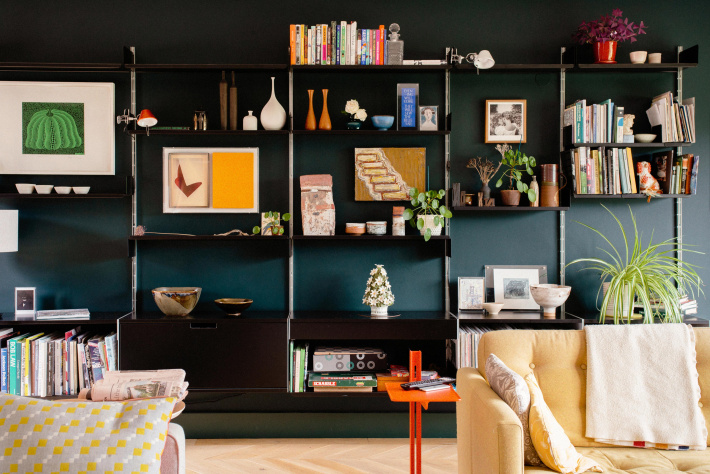
Next to us is the Vitsœ shelving system with John’s record deck and familiar items, including the Michael Stokoe artwork she had bought for him. Camilla has made coffee in her open-plan kitchen, and delicious seeded flapjack biscuits. Here too a familiar 606 system lines the wall. Like the others, these shelves have moved three times in the past five years.
We first spoke to Camilla, and her husband John, in 2020 when they had recently moved to a rented apartment in the Barbican, London, following John’s diagnosis with motor neurone disease. Later, when John became a wheelchair user and also required carers, Camilla and John moved yet again within the Barbican to a larger rented apartment.
Camilla explains that she and John had bought Vitsœ from the outset for the long term – in the full knowledge that their life together was not for the long term. “One of the constants in my life has been Robin and Vitsœ, or rather Vitsœ and Robin her Vitsœ planner. When we moved from one flat to another within the Barbican, the one thing that made it feel like home was the shelving, because it housed the record player; it housed all of John’s records; and it had all our lovely things on it.
“Lots of people came in and commented, ‘have you really moved, it feels like your old flat.’ And that was something we wanted, we didn’t want it to feel strange.” John’s children stayed with them when their father was in his final stages of life. As Camilla describes “we all mucked in together, Amy and Ben (the twins) and their older siblings Joe and Emily”.
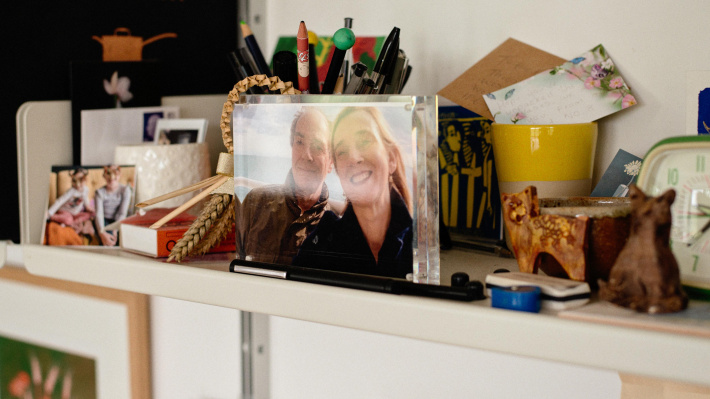
John died in 2022, leaving Camilla and John’s four children to embark on life without him. The rented flat had served a very particular function but was clearly not a forever home. Camilla explains “I was very restless after John died and I just wanted to get on with things. The thing about his particular illness was you couldn’t hang about with motor neurone disease, everything happened so quickly.” She left the Barbican and moved to Crouch End, north London, where she and the twins could be together. As Camila says: “Even though they were heading off to university, it felt like a very important statement.”
Again, Robin stepped in, arranging to dismantle and reconfigure the shelving, while offering a small amount of continuity in their lives. “It was very different in north London because we were different, we hadn’t got John. I didn’t feel it was a house for life. I felt quite determined to be in a design-led home. I didn’t want to be in a classic Victorian terrace after 20-odd years in the Barbican, plus John’s children had come from a much-loved terraced house in Brighton.
For Camilla, 2022 was an ‘annus horribilis’ as she went on to lose both her parents. She reflects: “The end of John’s life, and the worst part of his motor neurone disease, both happened during Covid. One of the things that affected me really deeply was not seeing my own family, who were, and are, Suffolk-based.” With the twins away at university, she pined for her Barbican full-width balcony 'meadow'. The need for a proper garden had become a driving force to up-sticks again and move out of London.
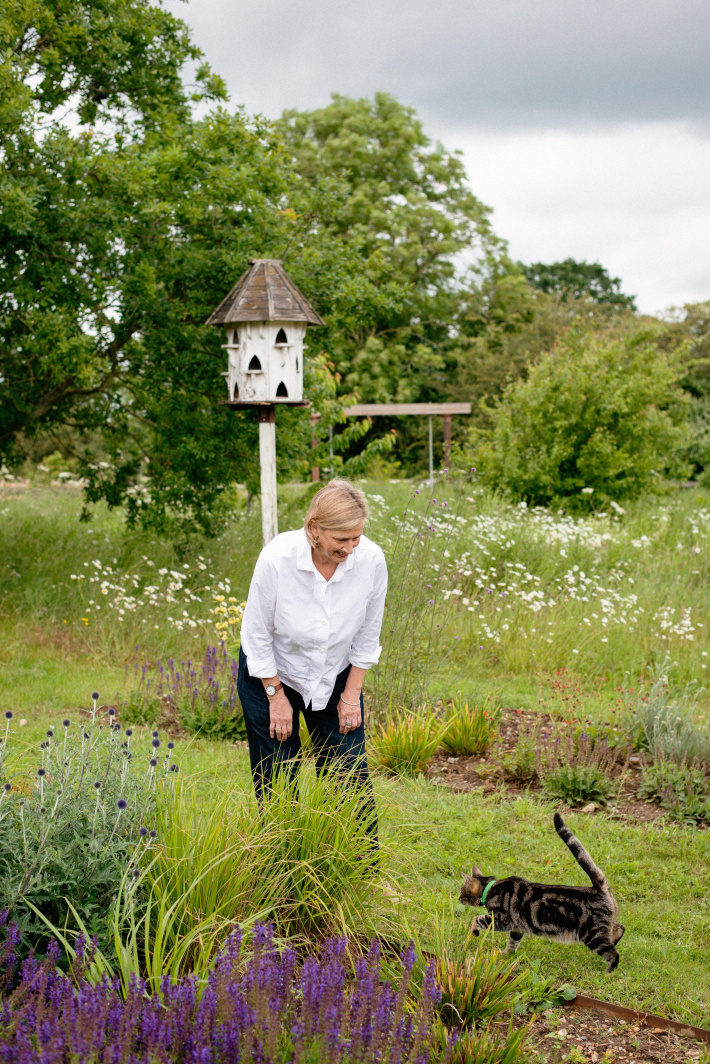
“It made sense to come to Suffolk. And I love Suffolk. This house came on the market, and it just had to be.” John’s youngest daughter viewed the house with her, as Camilla was determined that the house would also offer a home and stability for the twins. Here in Suffolk, Camilla describes her sister as “the magnet for her own children, as well as their children”, giving Camilla ample opportunity for quality time with her sister, nephew and niece plus her four great-nieces.
As a treat for her sister’s birthday, they attended a pottery taster day “and we loved it so much”. Camilla followed up with a short course, with the passion escalating — “now it’s twice a week. I feel very, very lucky.” In the main sitting area, the dark petrol-blue walls are lined with more recently acquired black 606 shelving. “I think it works beautifully. It’s a big room and needs warmth – it’s where the fire is and where we sit and watch telly. I thought ‘let’s keep this dark’.” On the shelves her own ceramics sit happily nestled with those by Chris Prindl, Pierre Culot, Akiko Hirai and Robin Welch.
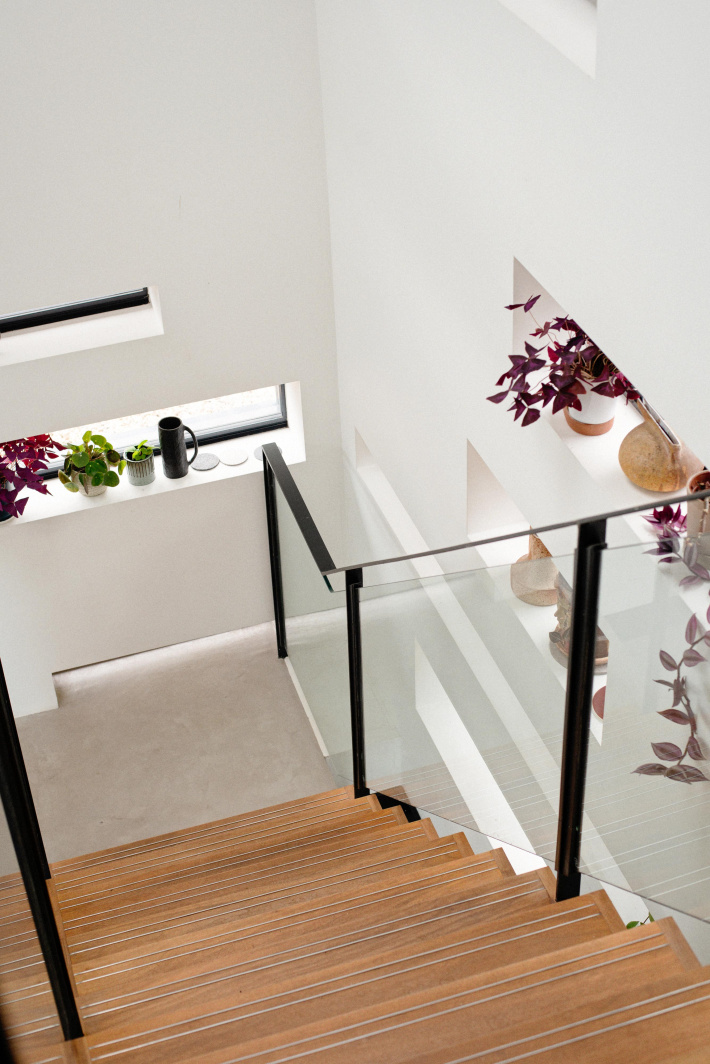
The stairs offer a fantastic gallery, again with her own ceramics juxtaposed with those of established makers and small treasures placed in front of captured views of wisteria, chimney pots, a weather-vane and trees. Upstairs is her work room.
Throughout, Camilla has maintained three days a week as a psychotherapist. She explains: “one thing that Covid did was to teach therapists and clients how to interact via video call”. This has also allowed her the flexibility of where she lives.
Her bedroom overlooks the garden. Adjacent is a small dressing room, again Robin’s 606 planning has provided a space that Camilla claims gives her ‘daily joy’. It is clearly lived and loved. The view from the bedroom shows the work Camilla has undertaken planting the garden. She is excited that just a year on, the growth has been so incredible.
Four years after the loss of John, Camilla has succeeded in ensuring Amy and Ben have a welcoming home to return to, big enough, on occasion, for all of John’s children. She has offered clients the continuity of her psychotherapy and has been able to find peace for herself by having her hands in clay and soil.