The beautiful everyday
New York photographer Ethan Barber has spent ten years seeing the city in a way others overlook
Words: Leanne Cloudsdale and Vitsœ
Photography: Jessica Antola and Ethan Barber
In the book Ways of Seeing, John Berger asks us all to reconsider how we look at the world. First published in 1972, it is cited as one of the most influential books on art in any language. New York-based photographer Ethan Barber follows the Berger approach – he's made a career out of observing things that most people overlook. To him, the city's most compelling moments are rarely the spectacular ones.
For Ethan, watching carefully has become a way of slowing down. A person carrying their dry-cleaning home after a long day, a familiar street corner caught in a different season, or a fleeting exchange between strangers, holds as much fascination as the city's most recognisable landmarks. “I've always had an interest in the ordinary and celebrating things that go unnoticed,” he explains. “My earliest photos were simple shots of raindrops on car windows, trees and blades of grass in the backyard, or even the fish in my fish tank. Everyday happenings that were otherwise unremarkable felt remarkable to me.”
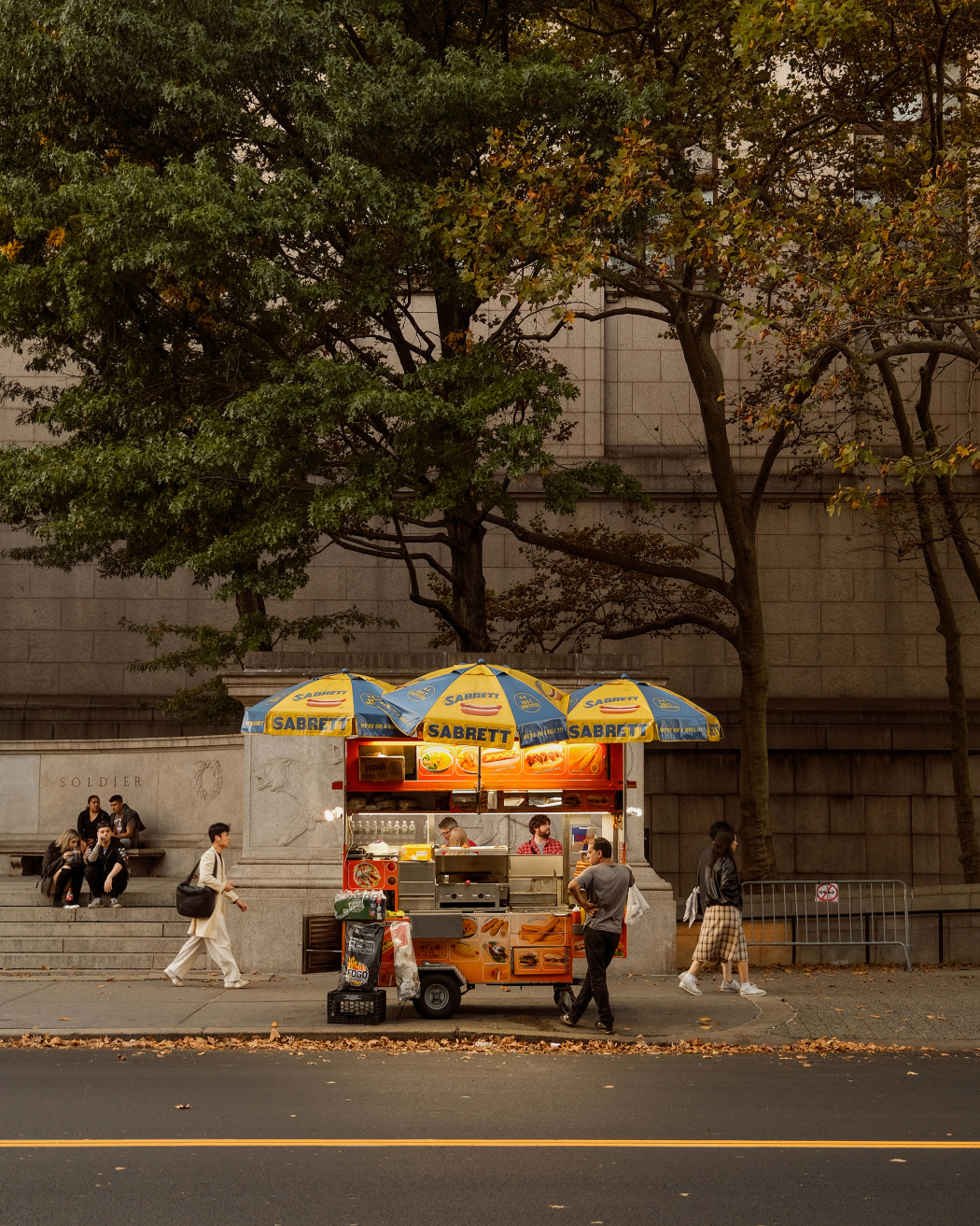
2026 marks ten years since Ethan began photographing New York seriously. In that time, both the city and his way of seeing it have changed. He's worked across film, digital, and instant photography, filmed thousands of short-form clips and created longer, more contemplative moving images. A decade later, his modus operandi remains the same, returning to familiar places to see what happens next.
He explains, “Whenever I head out to shoot, it's usually one of my only ways to escape the noise of daily life. I put my phone on 'do not disturb' and sometimes I don't even listen to music. I just wander, absorbing the world around me, somehow finding new ways of interpreting the same neighbourhoods. I feel an immense pressure at times that I'm not capturing it enough – and that it will change faster than I can document it. I despise the stereotypes that are thrown at New York, especially by the media. I want people to see past the flashy headlines of a major metropolitan area and see magic in the mundane.”
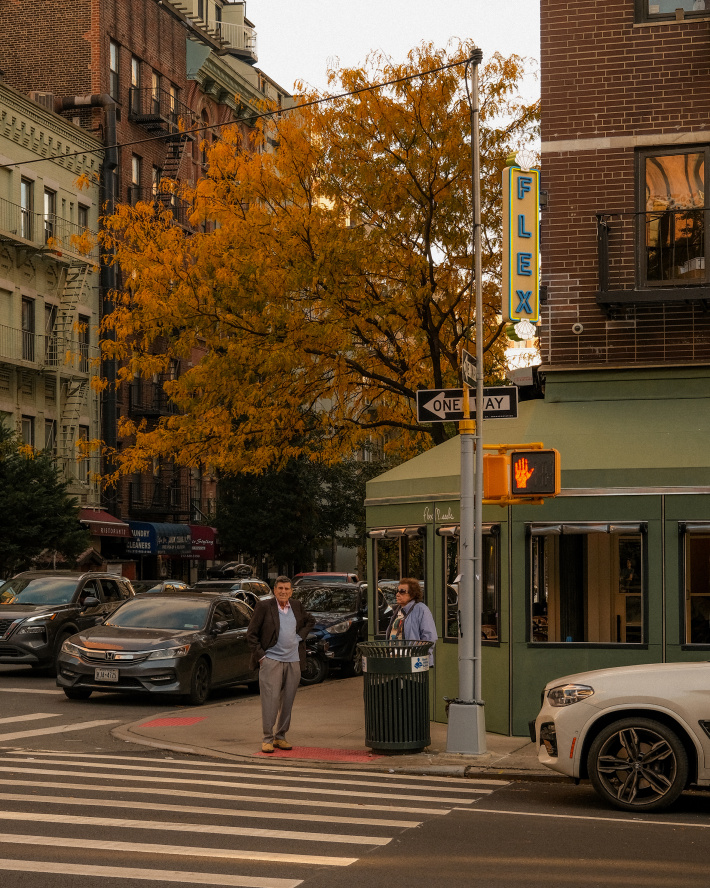
50 years from now, he hopes people will look at his work and understand that the romanticised New York of the past has never actually gone. The city is often characterised as a fast-paced, chaotic, concrete jungle, but Ethan's photographs suggest something different. It's become a personal mission to challenge the clichés and create an honest legacy for people who haven't visited yet. Despite these intentions, he often receives comments on his images saying, 'Oh, that New York City is long gone!' or 'Beautiful, but it doesn't look like this today!' Grinning, he says, “It makes me chuckle because these comments are always left on an image or video that was usually taken just a few days prior.”
Undeterred, Ethan deliberately returns to the same areas and street corners. He lets the light, the weather, and the people rewrite the scene each time. He reflects, “I've come to think of my captures as similar to snowflakes. There will never be two the same. I love using the same places as the anchor of my style, but then I allow time and the candid nature of my fellow humans to dictate the story itself. I think that's why it never gets old for me and why it never will.”
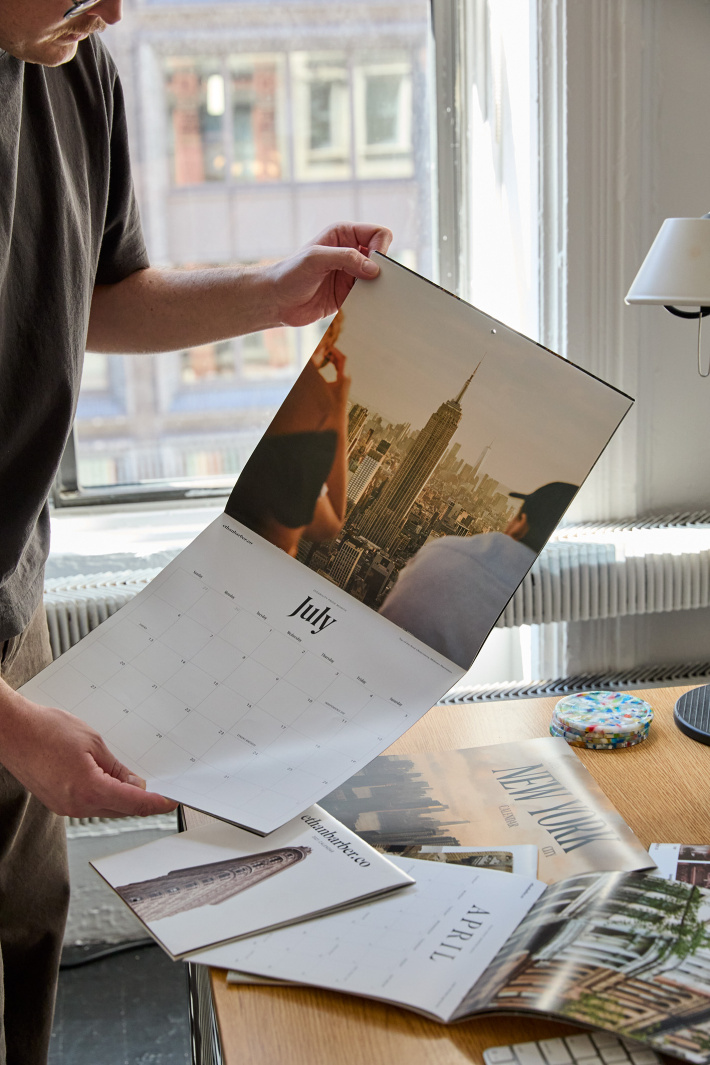
Although most of his archive exists on hard drives (and in the cloud), seven years ago Ethan started turning a selection of his photographs into an annual calendar. The first edition sold less than 50 copies. The following year, more than 150 were sold, then nearly 300. Today, thousands of calendars travel to more than 50 countries each year. “I didn't think anyone would actually buy one!” he laughs. “It's become such a labour of love that I genuinely look forward to designing it each year.”
Ethan lives in an Upper East Side apartment, explaining ”It's a beautiful, rent-stabilized two bedroom in a pre-war building right in the heart of Yorkville. The community here is incredibly strong. Over the years, we've come to know nearly everyone who lives in our building and almost all of the shop-owners on our block. From our dry cleaners to the cobbler, the corner deli and our favourite diner, we're big on investing in our local community whenever we can.”
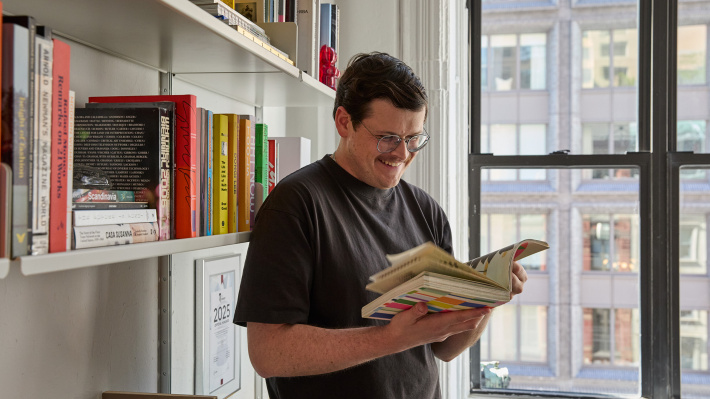
The apartment is divided into five distinct rooms, meanwhile Ethan's lofty studio space on Broadway is smaller, but gives the impression of greater volume, with 17ft ceilings and 10ft windows which flood in light, as he describes ”It's the perfect space for me to think, work, film, shoot, and do everything that I need to in order to maintain my business. I've come to love the juxtaposition of having a massive, sweeping, downtown space for work during the day and a small, more intimate, uptown apartment for my private life. It feels like I get to live the best of both worlds every single day.”
His appreciation of the everyday is equally evident in his love of flea markets, thrift stores, and second-hand shops. It's where he's found most of the things in his home and studio. Treasured items include a mid-century flatware set from a trip to the Netherlands, a 1990s out-of-print book given as a birthday present and a sofa from the 1960s. ”There's nothing I love more than spending the weekend hunting for my next favourite thing. I'll wait for years until I find the exact thing I want, at the right price. I grew up with the phrase 'patience is a virtue' repeated often! It's something I learned at a very young age and have taken with me into my adult life.”
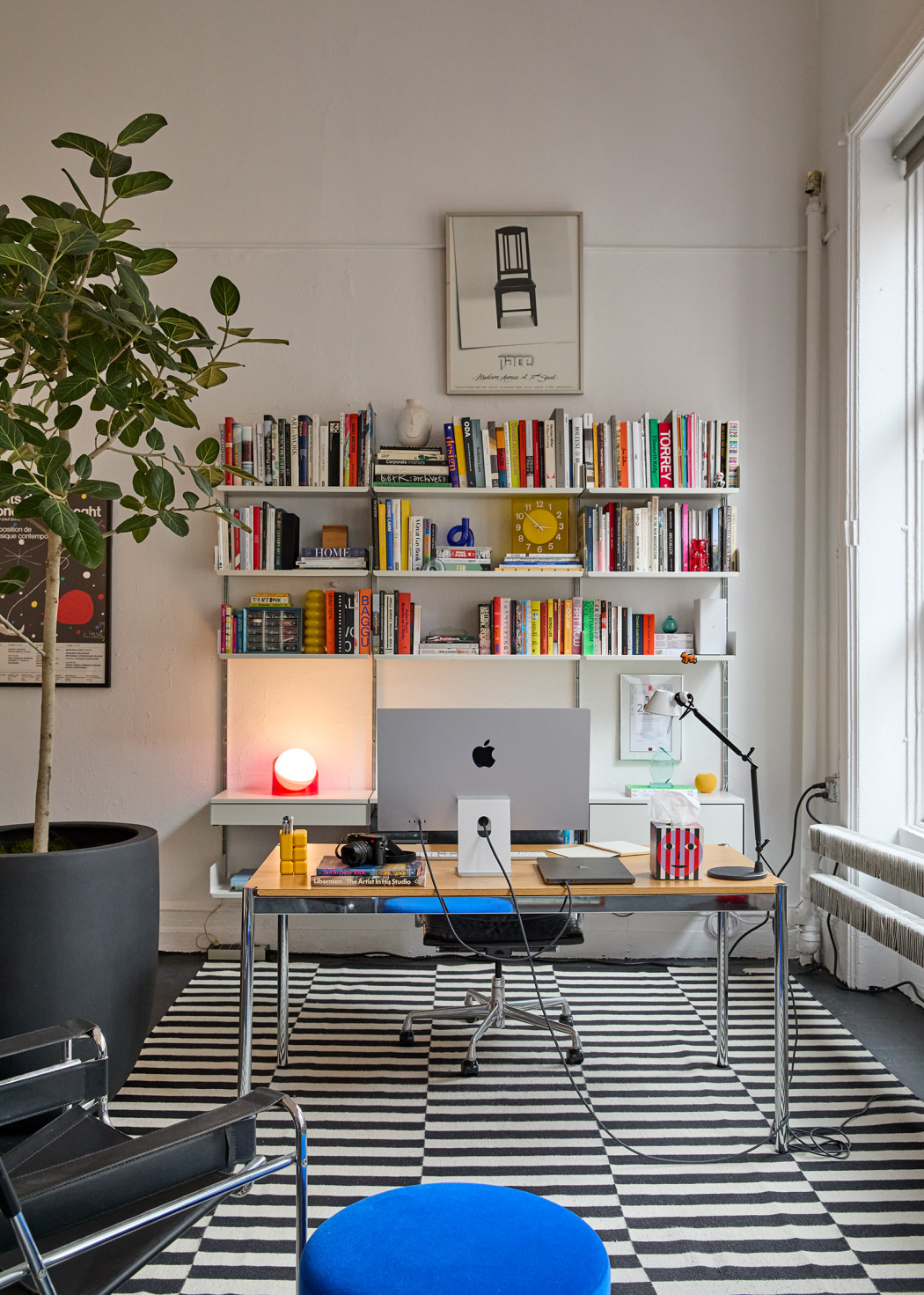
Ethan's interest in Vitsœ began with Jony Ive's Apple work, which led him to Ive's own influence, Dieter Rams, and from there to 606. He explains, “I discovered Rams’ designs for Vitsœ and almost immediately started dreaming of bringing 606 Universal Shelving System into my future home and studio space.”
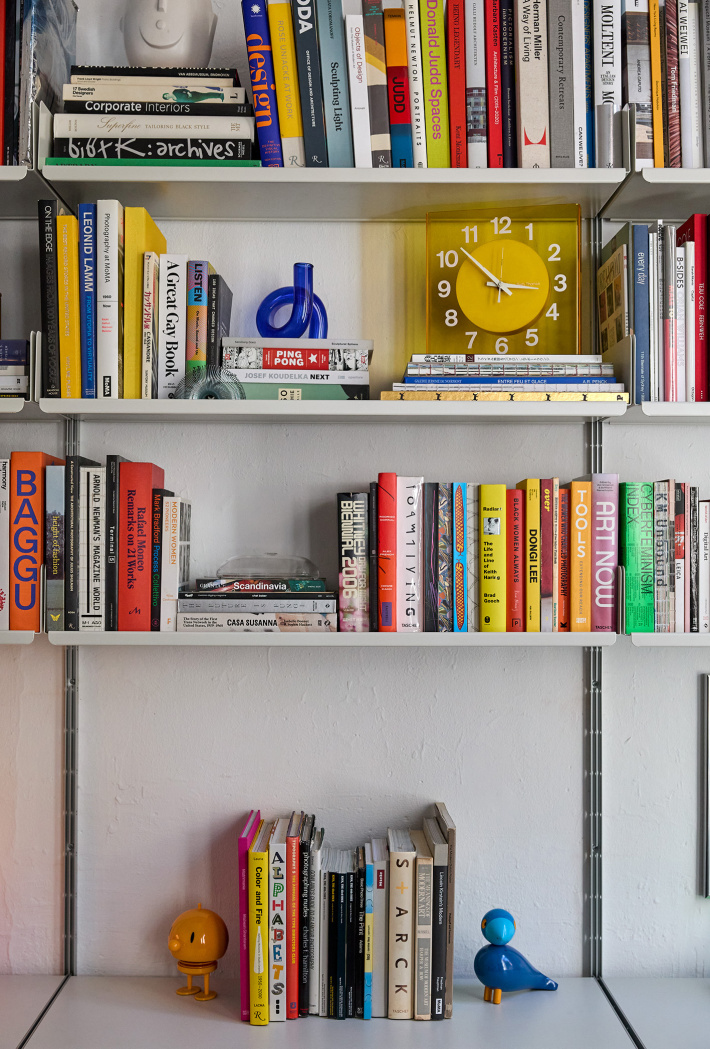
Ethan's first 606 system, which primarily held his personal library of art, graphic design, architecture, and photography books, was in his home. He later moved everything to his studio, and once it had left the apartment, it became apparent that there was still a need for housing a smaller library of inspiration at home. Thus, two additional 606 systems were planned and installed, one in the living room to hold a collection of movies and books and a second in the kitchen to act as extra storage for everyday items and appliances.
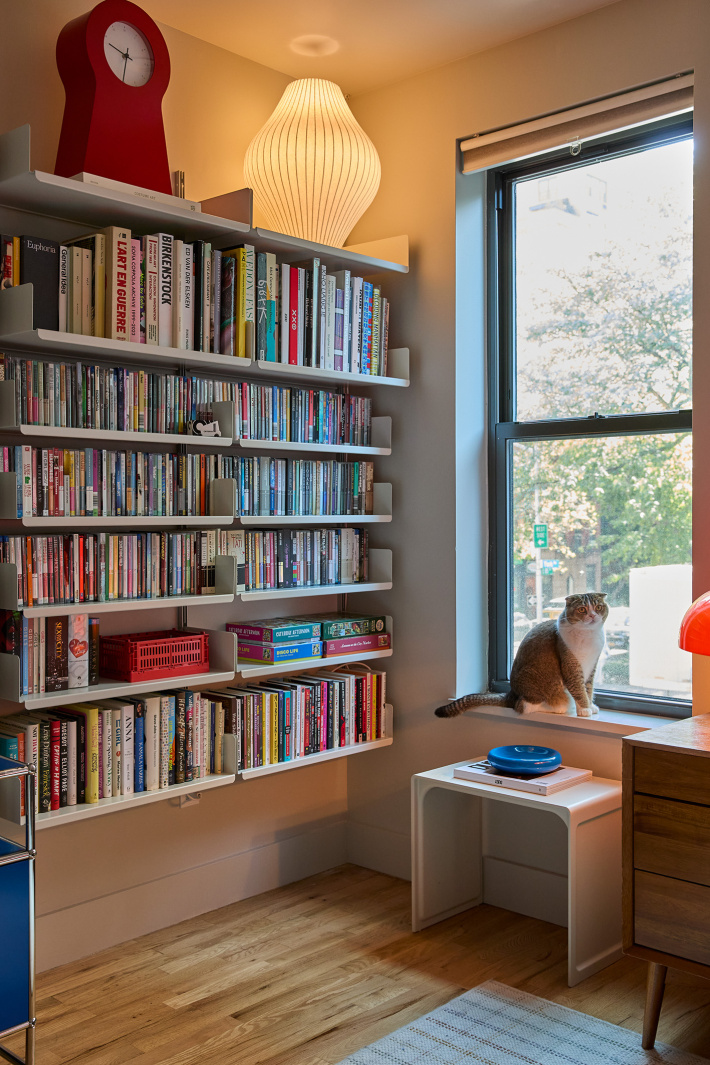
“I don’t ever imagine a day where I will part with any of them. I only think of adding more down the road,” he concludes. “The simplicity, the modularity, and the quality are unmatched. There’s a reason why this system has stood the test of time. It’s timeless and built to stay with you for as long as you need it.”
For someone whose profession is centred on capturing the passing of time, this wisdom makes total sense. Ethan doesn't expect to find beauty immediately – he's happy to linger long enough to notice it.