Dieter Rams
Dieter Rams and Vitsœ
Dieter Rams has always regarded his furniture as a constantly evolving project, and Vitsœ as the place where his design philosophy remains alive.
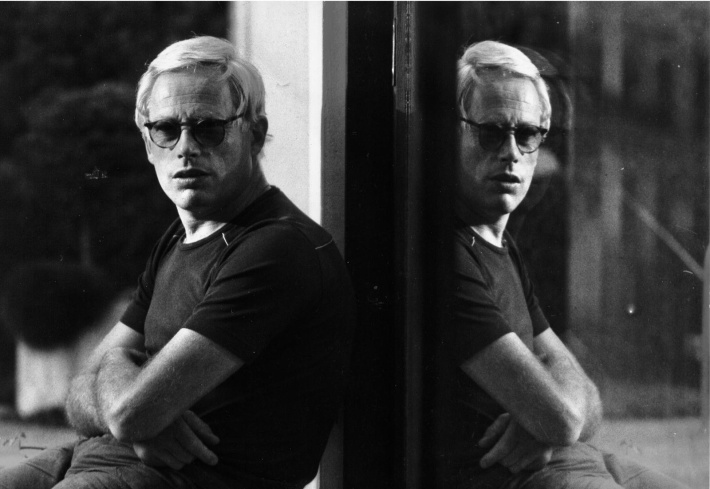
"In 1957 I began to develop a storage system that formed the basis of the company Vitsœ, which was founded in 1959. Thus, the ideology behind my design is engrained within the company."
Rams’s early years
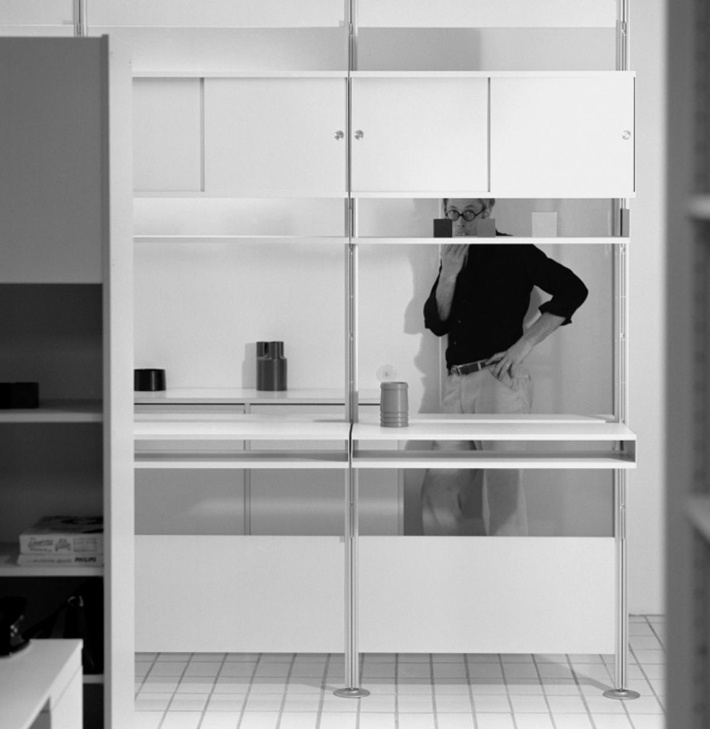
Rams was born in Wiesbaden, Germany, in 1932. He was strongly influenced by the presence of his grandfather who was a carpenter. Rams's early awards for carpentry led him to study interior design at Wiesbaden School of Arts and Crafts, and then train as an architect, as Germany was rebuilt in the early 1950s.
Prompted by an eagle-eyed friend, Rams applied for a job at the German electrical products company, Braun, in 1955. He was recruited by Erwin and Artur Braun following the death of their father, and Rams's job was to modernise the interiors of the company that was launching revolutionary electrical products.
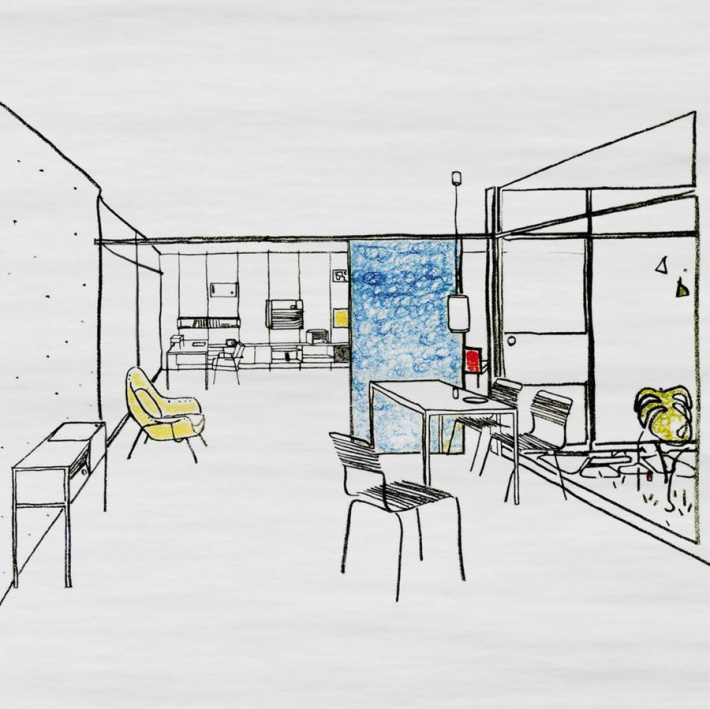
In his first year, the 23-year-old Dieter Rams presented a sketch of his proposals for the new interiors at the company. On the back wall of the boldly modern scheme was the very first notion of a track-based, wall-mounted storage system. In 1957, Dieter Rams asked Erwin Braun if he could design furniture for another company. Braun's spontaneous answer was "Yes. It will help the market for our radios." Two years later, the company Vitsoe+Zapf was founded. In 1960, the wall-mounted 606 Universal Shelving System was launched.
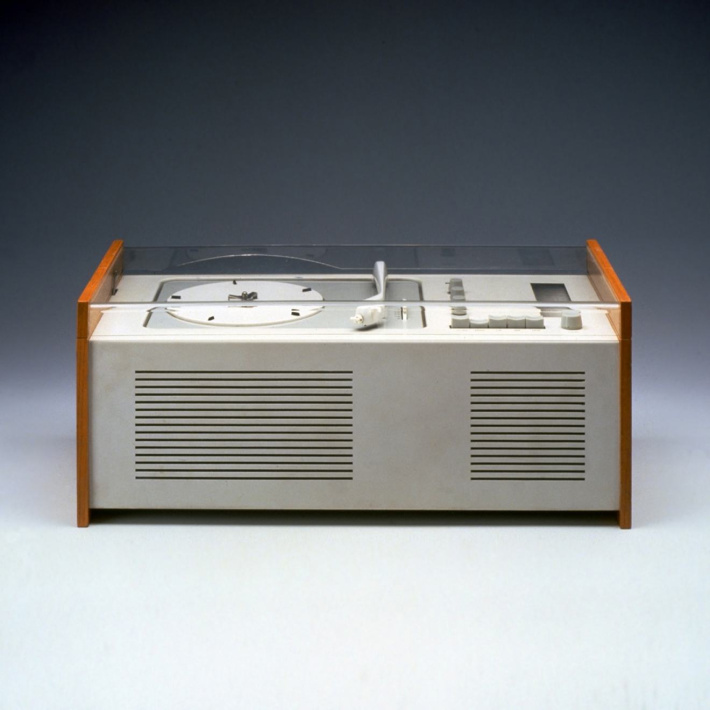
At Braun, Rams quickly became involved in product design – famously adding the clear perspex lid to the SK 4 radiogram in 1956 – a detail so unexpected at the time that the product earned the nickname 'Snow White's coffin'. He was appointed head of design at Braun in 1961, a position he held for the following 34 years.
Designing for Vitsœ since the 1950s
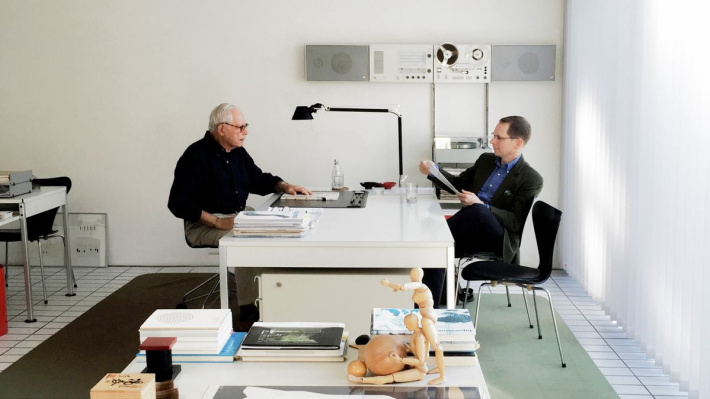
The design language Rams developed across his Braun work runs directly through Vitsœ's furniture. The 606 shelving system was designed to accommodate the size of the Braun Audio 1 compact hi-fi system, so that the two could sit together as a considered whole. His Braun and Vitsœ work were, from the beginning, two expressions of the same thinking.
The dual career of Dieter Rams continued until his retirement from Braun in 1997. He was convinced that the very best design can only be achieved from design teams within companies and has remained closely connected to developments at Vitsœ, working with the company's British director, Mark Adams, for more than 40 years.
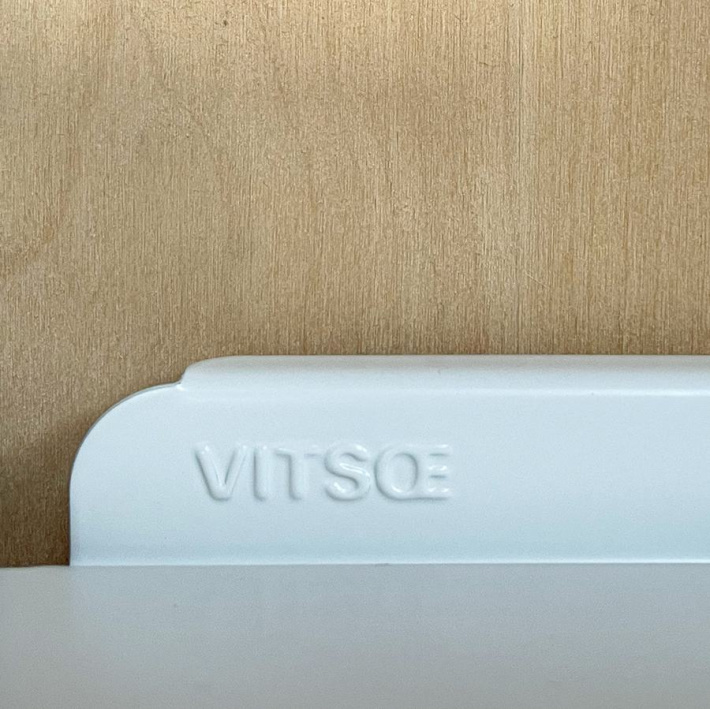
That relationship has been worth defending. In 2018, a German court described 606's metal shelf as "extremely reduced, clear and calm" with shelves that give "the impression of a flowing lightness" – a judgment that became known in legal circles as the 'lyrical judgment'. In 2023, the Italian Supreme Court of Cassation recognised the 606 Universal Shelving System as a work of art, copyright-protected on behalf of Rams and Vitsœ. The following year an embossed hallmark was added to every Vitsœ metal shelf to prove its authenticity. The 620 Chair Programme has held formal copyright protection since 1965, when it was recognised by the German government as a work of outstanding aesthetic value.
Dieter Rams’s philosophy
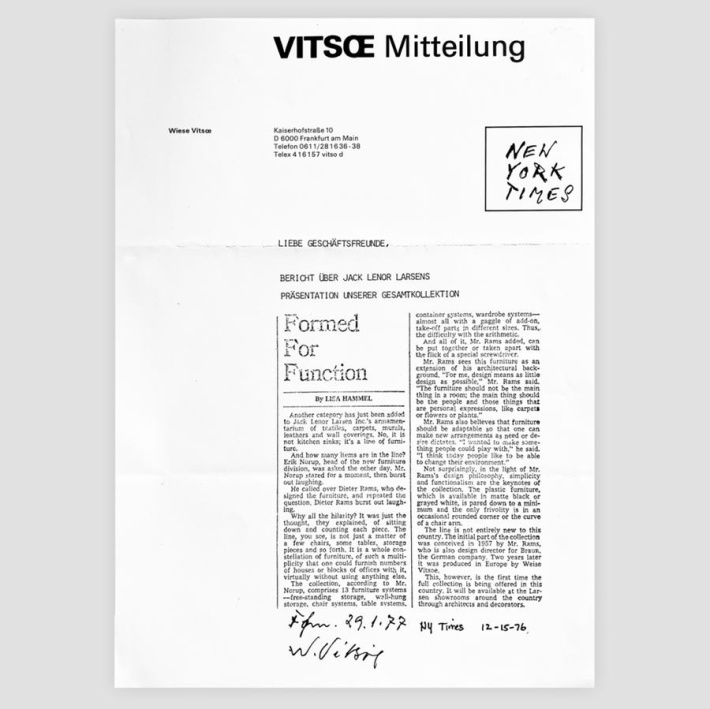
In 1976 Rams delivered a frank and prescient speech in New York, titled 'Design by Vitsœ', and in it he asserted his commitment to responsible design. He spoke of an "increasing and irreversible shortage of natural resources" and called on designers – and everyone – to take more responsibility for what they put into the world. The United Nations would not establish the Brundtland Commission to address exactly these concerns until seven years later.
Design by Vitsœ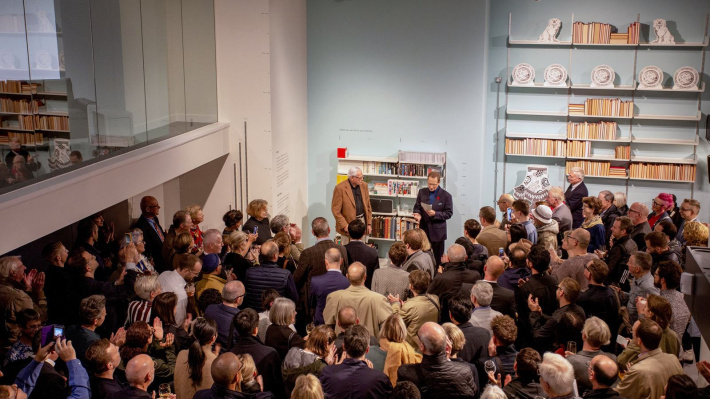
"I imagine our current situation will cause future generations to shudder at the thoughtlessness in the way in which we today fill our homes, our cities and our landscape with a chaos of assorted junk."
Ever since, Rams has been an outspoken voice calling for "an end to the era of wastefulness" and to consider how we can continue to live on a planet with finite resources if we simply throw everything away.
At the same time, Rams was becoming increasingly concerned by the state of the world around him: "An impenetrable confusion of forms, colours and noises."
Aware that he was a significant contributor to that world, he asked himself an important question: is my design good design?
His answer is expressed in his ten principles for good design. More succinctly, he then coined 'Less, but better.'
Ten principles for good designRecognition and legacy
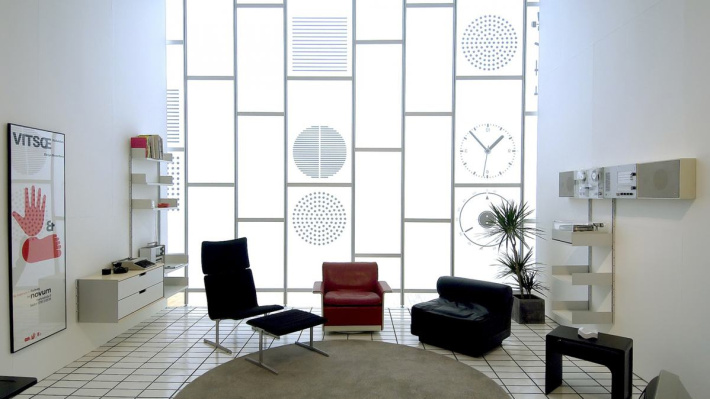
Dieter Rams is recognised today as one of the most influential industrial designers of the 20th century.
The 606 Universal Shelving System is held in the permanent collection of the Museum of Modern Art in New York. The 620 Chair Programme is in the permanent collection of the Victoria & Albert Museum in London. His work has been exhibited widely, including the touring exhibition 'Less and More' that visited Osaka, Tokyo, Seoul, London and San Francisco between 2008 and 2011.
While many of his designs for Braun are held within museum collections around the world, it is through Vitsœ that Rams sees the continuation of his design philosophy. His furniture now sells to over 90 countries, with Vitsœ remaining the sole worldwide licensee of those designs.
In 2018, American filmmaker Gary Hustwit released 'Rams', a documentary film exploring Rams's achievements and design philosophy, with a soundtrack by Brian Eno. It brought his work to a new generation of design enthusiasts worldwide.
Designers who have cited Rams's influence include Jony Ive, formerly of Apple, Naoto Fukasawa and Jasper Morrison, each of whom has spoken directly about how his thinking shaped their own.
In 1992, together with his photographer wife Ingeborg Rams, he established the Rams Foundation to promote the views they had spent their lives articulating: that design should serve people, conserve resources, and resist the merely fashionable.
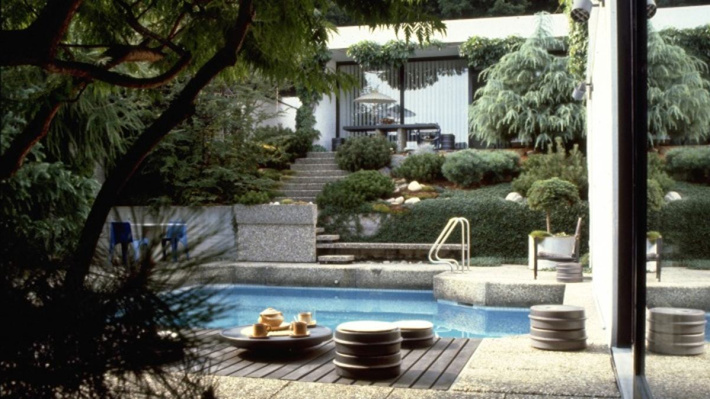
He designed his house in Kronberg with the architect Rudolf Kramer in 1971, and has lived there ever since, furnished throughout with Vitsœ products. The house has been listed by the Hessen Office for the Preservation of Historical Monuments and is protected for future generations, via the Rams Foundation – a building that is itself a statement of his principles.
The home of good designDieter Rams images
Vitsœ product images